

 LinkedIn
A crawler can hit your site 45,000 times without putting your name in a single AI answer. Yet businesses keep treating bot traffic, Google rankings, and visibility dashboards as proof that citations are coming. I keep seeing 2018 SEO tactics repackaged as Answer Engine Optimization, right down to the promise that an llms.txt file will finish the job. Being crawled is not being cited. The difference matters before you spend another dollar trying to close it.
Myth 1: “Ranking #1 on Google means AI will cite you”
The logic sounds tidy: Google built Gemini, Gemini powers AI Overviews, so the answer must draw from the top organic results. That assumption sends teams after position one for a broad commercial term while more specific sources answer the questions inside the prompt.
An analysis of 167.8 million Google AI Overview citations by Conductor found that 57% of cited URLs sat outside Google’s organic top 10. The top organic position had the highest single probability of earning a citation, but that probability was still roughly 25%; by position 10, it was 10.2%. In a separate Ahrefs study of 863,000 SERPs and 4 million citations, only 37.9% of cited URLs came from the first page of organic results, while 31.0% ranked beyond position 100.
Rank still matters. It just cannot do the whole job. Answer engines can break a complex prompt into narrower retrieval queries, then look for a page that addresses a definition, comparison, or factual detail. A landing page built to rank for a broad category term may offer little they can use for those narrower questions.
Start with the comparison, pricing, and category questions buyers actually ask. Find the prompts where your brand is absent, then make the relevant answer easy to find on the page. Moving up one position is not a substitute for answering the question.
Myth 2: “You can pay for a spot in AI Overviews”
Ads appeared around AI Overviews, and the pitch practically wrote itself: buy your way into the answer. It sounds plausible if nobody stops to ask whether an ad placement and a citation are the same thing. They are not.
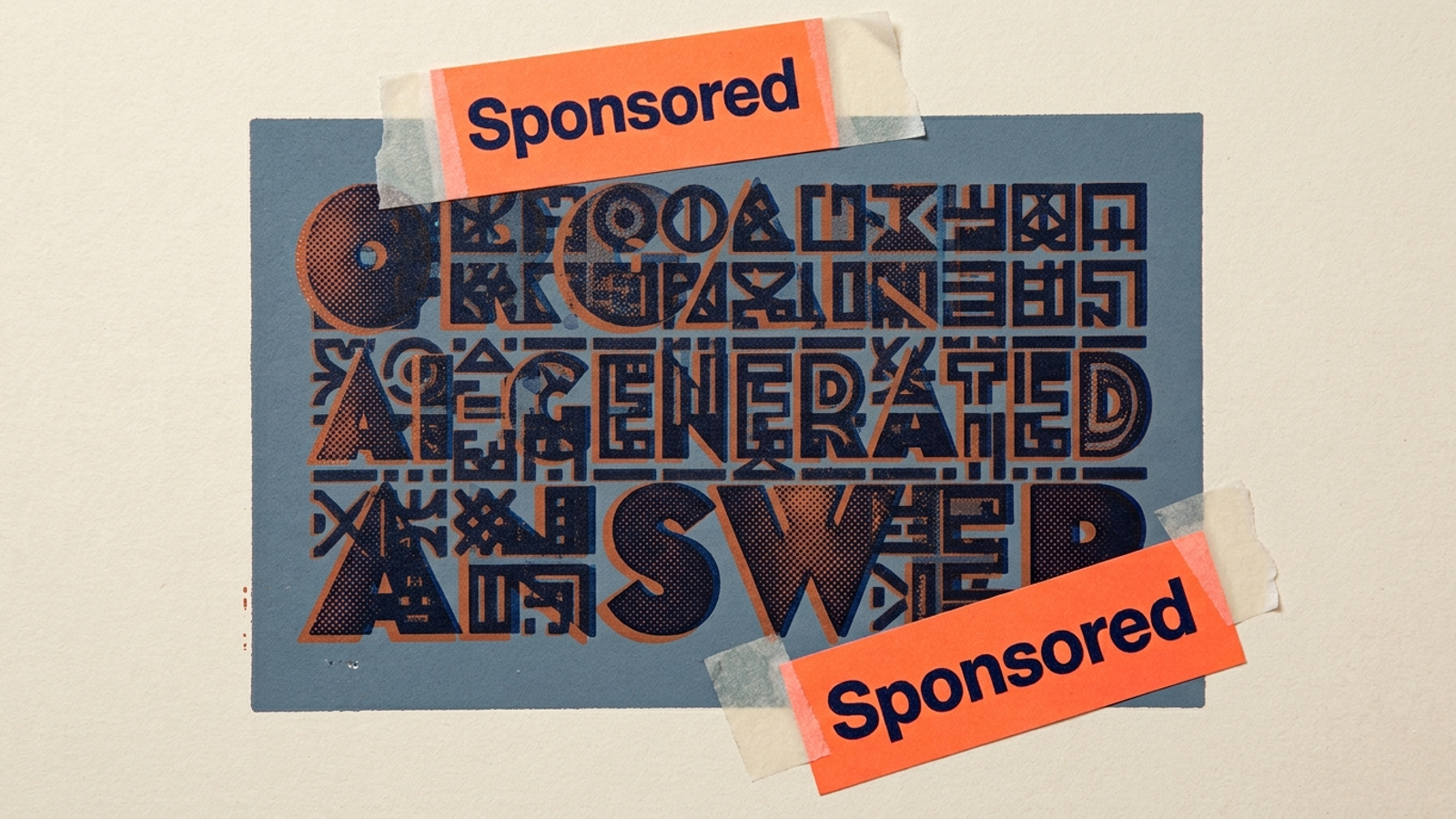
According to Google Ads documentation, ads in AI Overviews can be served dynamically from existing Search, Shopping, and Performance Max campaigns. There is no separate checkbox or ad group setting that buys an organic citation. Ads carry a “Sponsored” label; the cited sources in the answer do not. An ad impression is not an editorial citation.
Paid search can put you in front of a buyer. I have no objection to paying for that when the economics work. But increasing your ad budget does not make the content on your site easier for an answer engine to retrieve or cite. If a proposal treats “AI Overview placement” as a shortcut to organic citations, ask which of those two outcomes you are actually buying.
Myth 3: “A visibility dashboard is an AEO strategy”
I understand the appeal of a clean chart showing your citation share beside three competitors. Tracking can tell you where you are missing. It cannot change the page that gets skipped, clear a crawler block, or make an ambiguous comparison understandable. Monitoring is diagnosis, not treatment.

The distinction gets lost when teams buy an Answer Engine Optimization tracker, review it every Monday, and call the meeting a programme. The chart may show that an engine cited three competitors for high-intent evaluation prompts. If nobody changes the content or fixes the technical reason your page was missed, next month’s chart has a good chance of telling the same story.
That is the useful test when choosing tools to get featured in Google AI Overviews, rather than merely monitor them: what happens after the gap appears? A tracker can identify a missing prompt. The work is to inspect the competing answers, surface the relevant facts on your page, and clear any extraction problems. At groas, specialised models identify prompt gaps and carry out ongoing paid and organic search work under a named human strategist. The point is not a prettier report. It is turning what the report found into a change.
Myth 4: “Lots of AI bot traffic means you’re being read”
A log full of AI-looking requests feels like momentum. It is also easy to misread. A request tells you that something asked your server for a URL. On its own, it does not tell you whether the requester was genuine, why it came, what it could read, or whether any answer cited you.
OpenAI’s crawler documentation distinguishes several purposes: GPTBot crawls for material that may be used in training; OAI-SearchBot is associated with surfacing sites in ChatGPT search; and ChatGPT-User can fetch a page in response to a user request. Those are not interchangeable events. Even a genuine live fetch is not, by itself, proof that your page appeared in the resulting answer.
User-agent strings make the first count especially slippery. A scraper can claim to be an AI bot in its request header. Before drawing conclusions from a traffic spike, check the request against the bot’s published verification information rather than trusting the name in your analytics. Then separate the events you can verify from the ones you cannot.
At groas, we split this traffic into three tiers:
- Raw user-agent hits: requests that claim an AI bot identity.
- Verified crawler visits: requests whose origin checks out.
- Live-answer fetches: requests associated with fetching a page for an answer.
In our edge-log measurements across client accounts, less than 4% of raw AI crawler traffic represented live-answer retrieval. The rest of that raw bucket should not be counted as people seeing your brand in answers; it includes other crawler activity and requests whose headers alone establish little. A live-answer fetch still needs its own caveat: it shows retrieval, not citation.
That is why I would not use an aggregate bot-traffic graph as an AI visibility score. It is like reading your electricity bill to judge customer satisfaction. Check what the traffic actually represents, then check the answers.
Myth 5: “An llms.txt file or schema markup gets you cited”
A file upload is wonderfully easy to sell as a strategy. The customer can see that it exists, the consultant can tick a box, and nobody has to deal with a vague product page. The trouble is that a machine-readable wrapper cannot rescue information the page does not clearly provide.
In Ahrefs’ research across 137,000 domains, 97% of published llms.txt files received zero crawler requests. Among files that did see activity, some visits came from GEO monitoring platforms and researchers. An analysis of roughly 300,000 domains reported by Search Engine Journal found no statistical correlation between having an llms.txt file and earning LLM citations. Removing the file from its predictive model made that model more accurate.
Schema markup invites a similar leap: if the facts are in JSON-LD, surely an answer engine must use them. In an observational study published by Robert Haase, 1,885 pages that added JSON-LD were evaluated against 4,000 control pages. The study found no citation increase distinguishable from zero in ChatGPT and Google AI Mode, and a 4.6% decline in AI Overviews.
Neither finding means structured information is forbidden. It means you should stop treating the format as the outcome. If the rendered page is thin, unclear, or inaccessible, adding markup does not fix the underlying problem. I would sooner fix the page already sitting at position eight: replace vague marketing claims with direct answers, clear comparisons, and facts a reader can check on the page itself. Do the visible work before paying for an invisible shortcut.
Myth 6: “Technical SEO doesn’t matter for AI answers”
This one usually arrives dressed as confidence in the model: “ChatGPT will figure it out.” Perhaps the product guide is excellent. If its useful text lives entirely inside a client-side JavaScript application, though, the bot may receive little more than an HTML shell. Good copy that a crawler cannot read has a distribution problem.
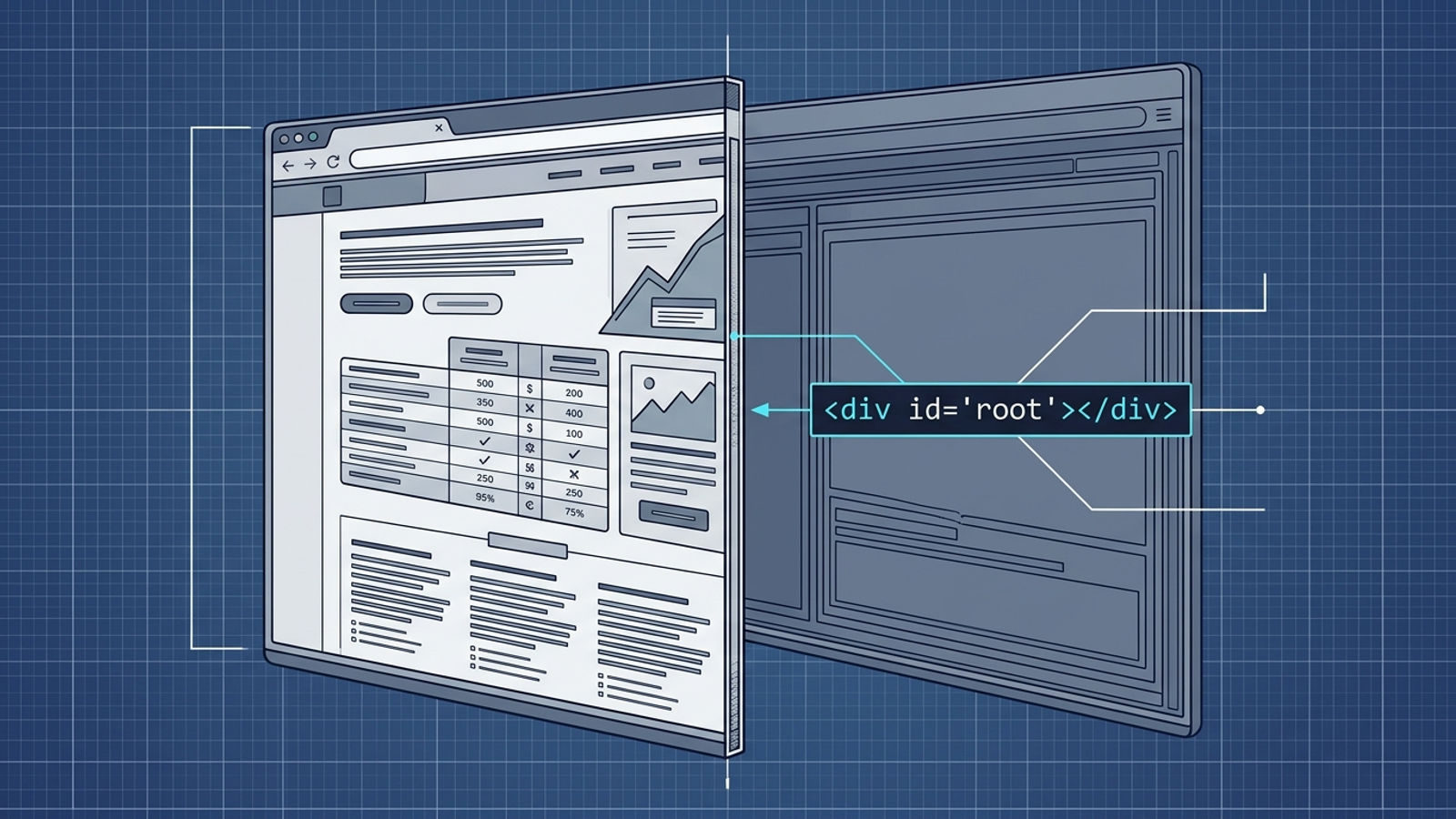
Research on AI crawler rendering analysing GPTBot requests and other AI crawlers found that crawlers including GPTBot, ClaudeBot, and PerplexityBot did not execute JavaScript. For a client-side-rendered page, that can mean the request returns something like <div id='root'></div> rather than the guide a person sees in a browser. The page you see is not necessarily the page the crawler gets.
The practical check is plain enough: inspect the HTML returned to the relevant crawler and confirm that the answers you want cited are actually present. If they are not, fix the technical SEO issues that hurt AI visibility. Server-rendered or pre-rendered content, accessible page structure, and bot-blocking rules deserve attention before another copy rewrite. Where a comparison belongs in a table, make it a readable HTML table rather than hiding the facts inside an interactive component.
Technical access does not guarantee a citation. It gives the content a chance to compete. That is a less glamorous promise than “the AI will figure it out,” but it is one you can test.
Myth 7: “AI visibility is a one-time project”
This is the hardest myth to kill because it fits the way marketing work gets purchased. Run a sprint, rewrite the pages, hit a citation on Thursday, send the completion deck. Then someone checks the same question later and sees different sources. The deck is still complete. The answer has moved.
Longitudinal tracking from Authoritas and SE Ranking found that 70% of URLs cited in AI Overviews changed over a two- to three-month period. On Google’s AI Mode, only 9.2% of cited URLs remained consistent across three runs of the same query on the same day. That does not make every citation worthless. It does make a single screenshot a poor finish line.
Answer engines regenerate responses, and their retrieval can favour different sources as the question, available content, and selection of evidence shift. Meanwhile, your own site changes. A pricing detail moves behind an interactive element. A comparison becomes outdated. A crawler rule blocks access. A competitor publishes a clearer answer. None of those problems waits for an annual overhaul.
The operating rhythm has to match the problem: keep checking the buyer prompts that matter; distinguish a missing citation from a missing crawl; fix access and extraction before celebrating traffic; and look for independent sources that substantiate the claims on your own site. A citation is an output to keep earning, not a box to tick once.
That is the case for continuous execution rather than another monthly deck. groas runs autonomous paid and organic search work around the clock, with specialised AI models doing the execution and a named human strategist setting direction and accountability. You do not improve AI visibility by watching a line chart hold steady. You improve it by doing the work the chart says is missing, then checking again.